In essence, vettings form the foundations of our customer commitment: To generate value for our customers, by offering safe and reliable transportation and storage of their products, at a competitive cost.
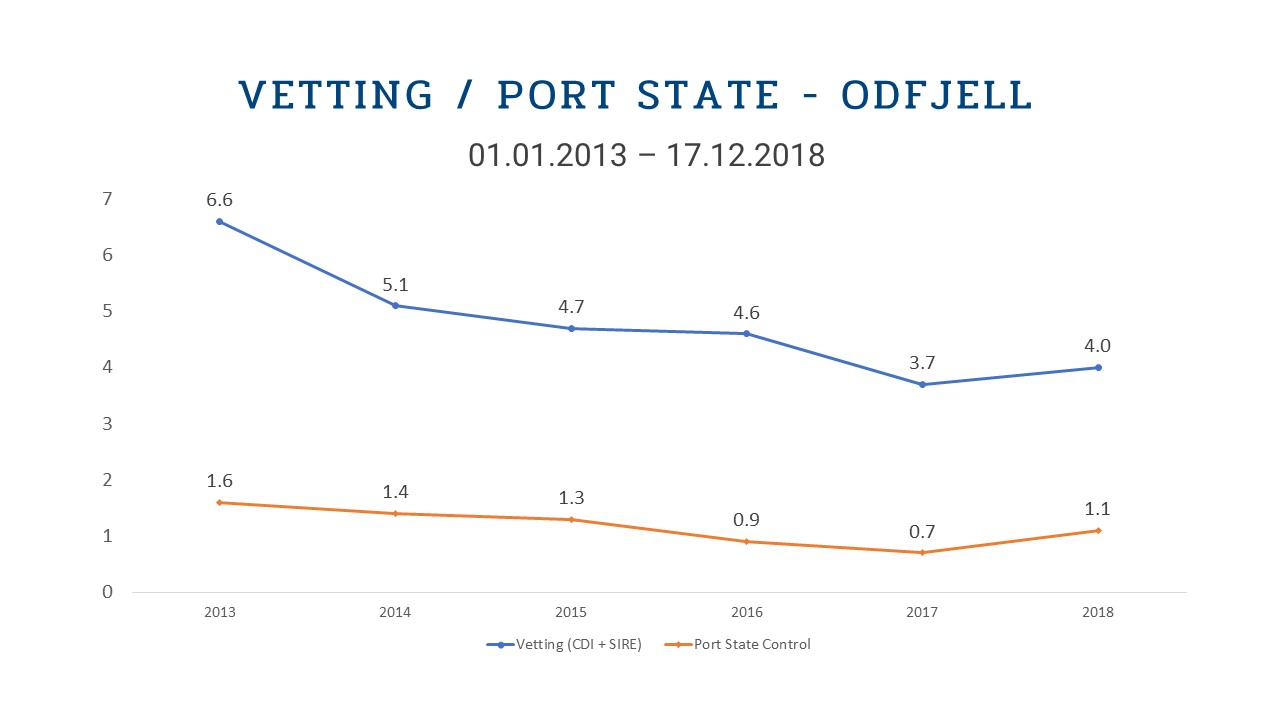
As the figure above shows, we made tremendous improvements in our vetting and port state performance from 2013 until 2017. Within four years, we brought down the average number of observations by 50%.
In the past year, however, our performance has shown a slight dip. This can be attributed to a number of things, but one truth remains the same: this is a setback that we can bounce back from, as we have shown and done in the past years.
Last year's dwindling performance do not speak for all vessels in the Odfjell fleet. One notable thing about the figures from 2018 is the increase in the spread of observations. There were ships that maintained their stellar performance and received zero or minor observations, while other vessels received numerous observations during inspections.
A consistent good performance in vettings is no mean feat. It entails meticulous preparations and demands a lot of resources from the already occupied personnel we have on board.
If one vessel can do it, so can the rest of the fleet. After all, our vessels are manned by professional, proactive and innovative mariners who have sustainable and world-class ambitions in everything they do, every day.
One important thing to keep in mind for all our seafarers onboard: Help is always available from shore.
In addition to assisting with the documentary requirements, the shore organization is developing business intelligence tools for process and performance monitoring and development. We are now able to analyze the data we have and turn it into valuable information that can help the ships improve their performance.
Vetting maybe a ship grading system, but in a way, it is also our way of communicating our commitment to our customers, and to the rest of the chemical tanker industry.
Jan Ove Ødegård
Marine Manager